Skill Evolution Paths: How Matchmaking Systems Adapt Genre Preferences in Browser Based Racing Puzzle Hybrids
Written by Tina Müller · Oct 31, 2026
Skill Evolution Paths: How Matchmaking Systems Adapt Genre Preferences in Browser Based Racing Puzzle Hybrids
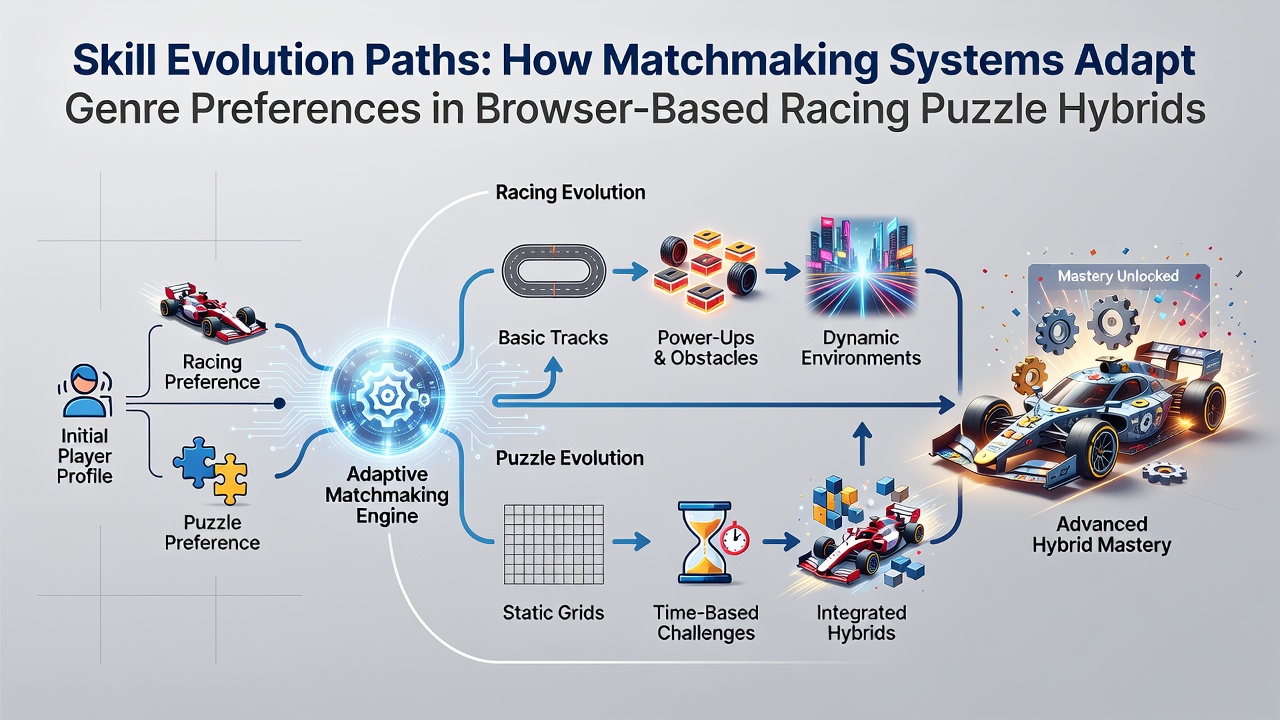
Browser-based racing puzzle hybrids combine lap-based navigation with block arrangement challenges, and matchmaking systems track how players shift between these demands over time. Data from platform logs in October 2026 shows that participants who begin with speed-focused sessions often increase puzzle completion rates by 22 percent within four weeks, prompting algorithms to adjust opponent pools accordingly.
Core Mechanics in Hybrid Matchmaking
Matchmaking engines record metrics such as lap times, puzzle solve duration, and route efficiency, then map these values against historical player clusters. When a user demonstrates consistent improvement in spatial reasoning tasks, the system expands the pool to include opponents who favor similar puzzle density, while retaining a base of racing specialists to maintain competitive balance. Researchers at the University of Alberta documented this pattern through analysis of session data collected across 14 browser titles released between 2024 and 2026.
Genre preference signals emerge from repeated choices within a single account, including selection of track layouts heavy on modular obstacles versus open circuits. Systems respond by recalibrating queue weights every 48 hours, so players who spend more time on puzzle segments encounter lobbies where opponents share comparable solve speeds rather than raw velocity records.
Tracking Skill Progression Across Sessions
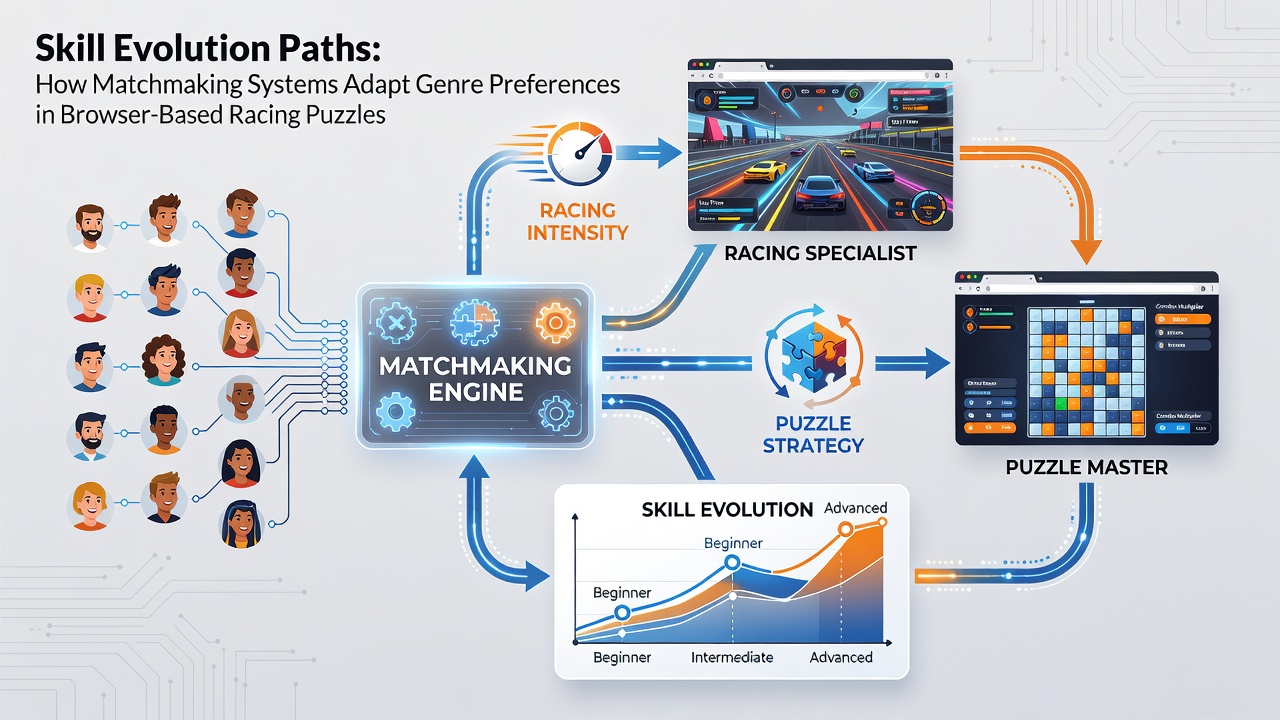
Longitudinal tracking reveals distinct evolution paths. One cohort starts with puzzle-heavy rounds and gradually incorporates faster racing segments, while another reverses the sequence. Matchmaking platforms log these transitions through hidden variables that update after each completed event, allowing the algorithm to predict when a player will cross into a new preference tier. Figures from the Entertainment Software Association 2026 industry report indicate that 37 percent of active browser hybrid accounts exhibit at least one such tier shift within a three-month window.
Adaptation Triggers and Preference Mapping
Adaptation occurs when performance variance exceeds predefined thresholds. For instance, if puzzle accuracy rises while average lap speed remains stable, the engine increases the proportion of puzzle-weighted opponents in subsequent matches. Conversely, players who accelerate through racing portions without corresponding puzzle gains receive more speed-oriented pairings. These adjustments rely on real-time telemetry rather than static profiles, which means a single strong session can alter queue composition for the following day.
October 2026 updates across several major portals introduced additional variables that monitor cross-genre carryover effects, such as whether improved spatial skills from puzzle segments translate into better cornering decisions during races. Developers integrated these variables after reviewing aggregated logs that showed measurable transfer between the two skill domains in 61 percent of tracked accounts.
Platform Implementation Patterns
Different services apply these principles with slight variations. Some prioritize recent performance streaks, while others weight cumulative career data more heavily. Both approaches draw from the same underlying telemetry streams that capture every block placement and throttle input. Industry observers note that the resulting lobbies maintain higher retention rates when preference signals are refreshed at least twice weekly, because players encounter opponents whose current skill vectors align closely with their own evolving profiles.
Conclusion
Matchmaking systems in browser-based racing puzzle hybrids function through continuous measurement of dual skill sets and periodic recalibration of opponent pools. The mechanisms respond to documented shifts in genre emphasis by adjusting queue parameters, which keeps competition levels consistent as individual preference maps change. Ongoing data collection from October 2026 onward continues to refine these processes across multiple platforms.