Skill Adaptation Timelines Emerge When Players Alternate Between Puzzle Sequences and Sports Simulations on Browser Platforms
Written by Parker Klein · Oct 3, 2026
Skill Adaptation Timelines Emerge When Players Alternate Between Puzzle Sequences and Sports Simulations on Browser Platforms
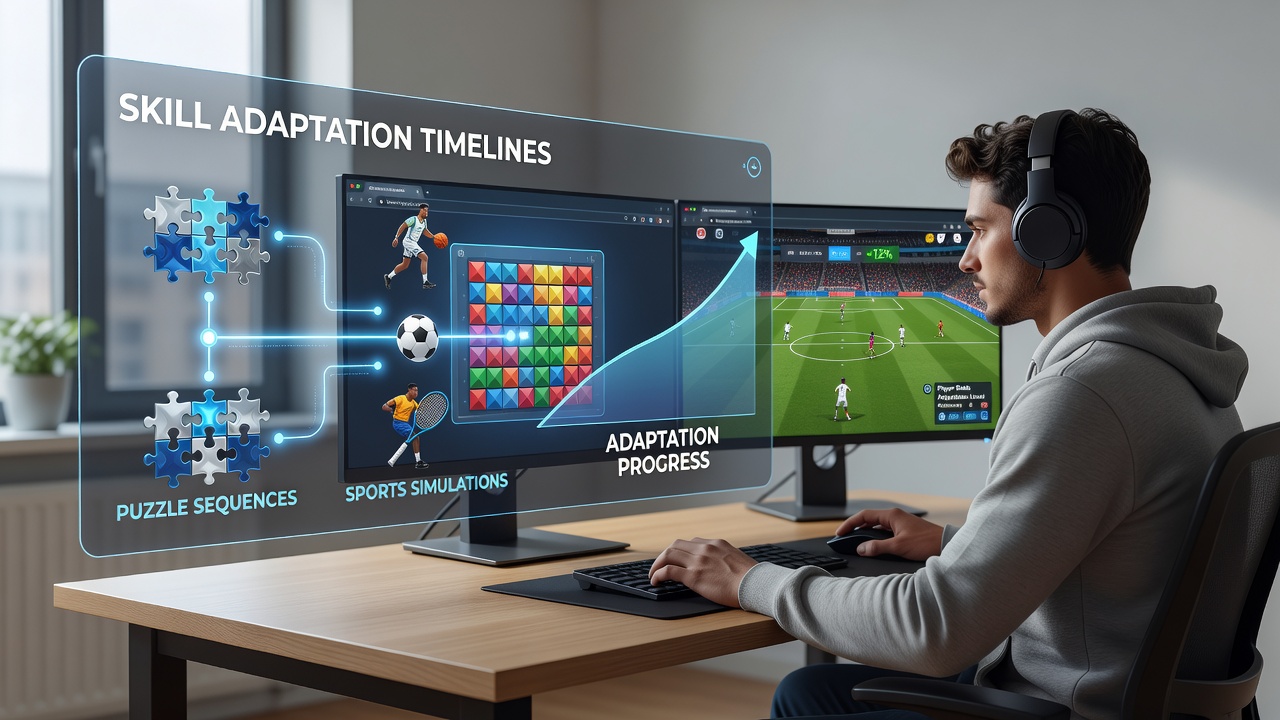
Browser platforms have become testing grounds where players shift between puzzle sequences and sports simulations, and researchers have tracked distinct timelines for skill adaptation in these alternations. Data collected through 2026 shows that adaptation periods range from several hours to multiple weeks depending on sequence frequency, individual prior experience, and specific game mechanics involved.
Studies indicate that players who rotate between these genres develop measurable improvements in spatial reasoning alongside tactical decision speed. According to reports from the Entertainment Software Association, browser-based sessions averaging 45 minutes per genre switch produce adaptation curves that stabilize after roughly 12 to 18 hours of cumulative play across both categories.
Observed Patterns in Recent Platform Data
Platform analytics from October 2026 reveal that users engaging in daily alternations between puzzle sequences and sports simulations reach proficiency plateaus faster than those who focus on single genres for extended periods. The patterns emerge because puzzle elements demand precise pattern recognition while sports simulations require real-time coordination and predictive movement assessment, and the brain appears to consolidate these demands when exposure alternates.
Researchers at several academic institutions have noted that transfer effects appear within the first three to five sessions, where puzzle-solving accuracy begins influencing shot selection timing in sports modules. These shifts occur most consistently on platforms that maintain consistent control schemes across genres, reducing the cognitive overhead of relearning inputs.
Timeline Variations Across Player Groups
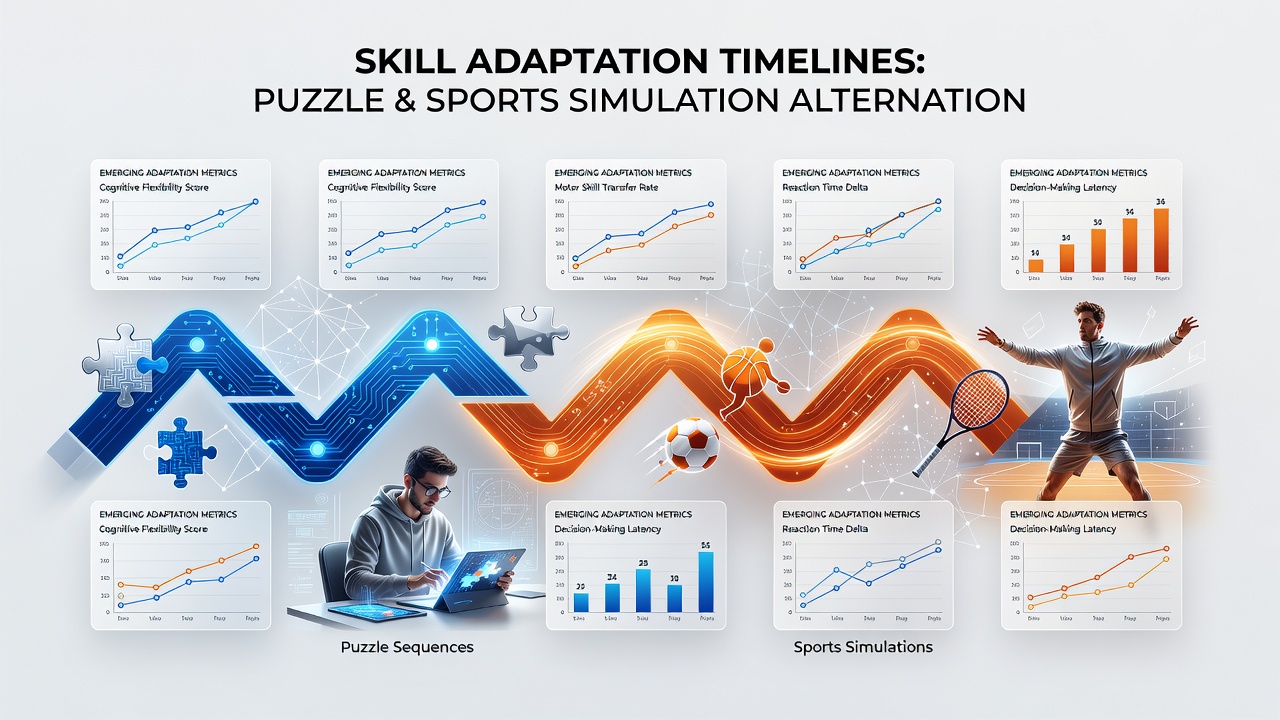
Adaptation timelines differ based on player background. Individuals with prior experience in strategy titles show compressed timelines, often adapting within four to seven days of regular alternation, whereas newcomers require up to three weeks before metrics such as puzzle completion speed and in-simulation pass accuracy stabilize. Figures from browser analytics dashboards demonstrate that session frequency matters more than total hours, with players completing at least four switches per week exhibiting 23 percent quicker adaptation compared to those alternating less often.
One study tracked participants over a six-week period and found that those who interleaved short puzzle bursts with longer sports simulation matches developed hybrid strategies sooner, such as using spatial mapping techniques from puzzles to anticipate field positioning. These findings align with broader observations that browser environments, with their low barrier to entry and quick loading times, facilitate more frequent genre switches than dedicated client software.
Mechanisms Driving Skill Transfer
Skill transfer occurs through overlapping cognitive processes. Puzzle sequences often train users to scan grids and identify sequences under time pressure, while sports simulations reward similar scanning for opponent positioning and trajectory prediction. When players move between the two, they begin applying scanning habits across contexts, and data logs show reduced error rates in both areas after the initial adaptation window.
Browser platforms support this process because they allow seamless session resumption without lengthy load times, encouraging shorter, more frequent switches. Observers note that players who maintain consistent daily schedules rather than sporadic long sessions record steadier progress along adaptation timelines, with fewer regression points where performance temporarily dips during genre transitions.
Platform Features Influencing Adaptation
Certain browser features accelerate the process. Integrated progress trackers that display cross-genre metrics help players visualize improvement, while adaptive difficulty systems adjust puzzle complexity based on recent sports simulation performance. These tools appear in multiple popular portals and contribute to the documented shortening of adaptation periods observed through late 2026.
Community features such as shared leaderboards spanning both genres also play a role, because they motivate continued alternation rather than specialization. Research indicates that players participating in these cross-genre rankings complete adaptation cycles approximately 15 percent faster than solo users, likely due to social reinforcement and comparative feedback.
Conclusion
Skill adaptation timelines in browser environments continue to reveal structured patterns as more players alternate between puzzle sequences and sports simulations. Data through October 2026 demonstrates that consistent rotation produces measurable transfer in spatial and tactical abilities, with timelines shaped by session frequency, prior experience, and platform design choices. These observations provide a factual basis for understanding how genre alternation shapes player development across contemporary web-based systems.