Exploring Transferable Abilities Across Action, Strategy, and Racing Titles in Contemporary Online Gaming Environments
Written by Tina Müller · Sep 19, 2026
Exploring Transferable Abilities Across Action, Strategy, and Racing Titles in Contemporary Online Gaming Environments
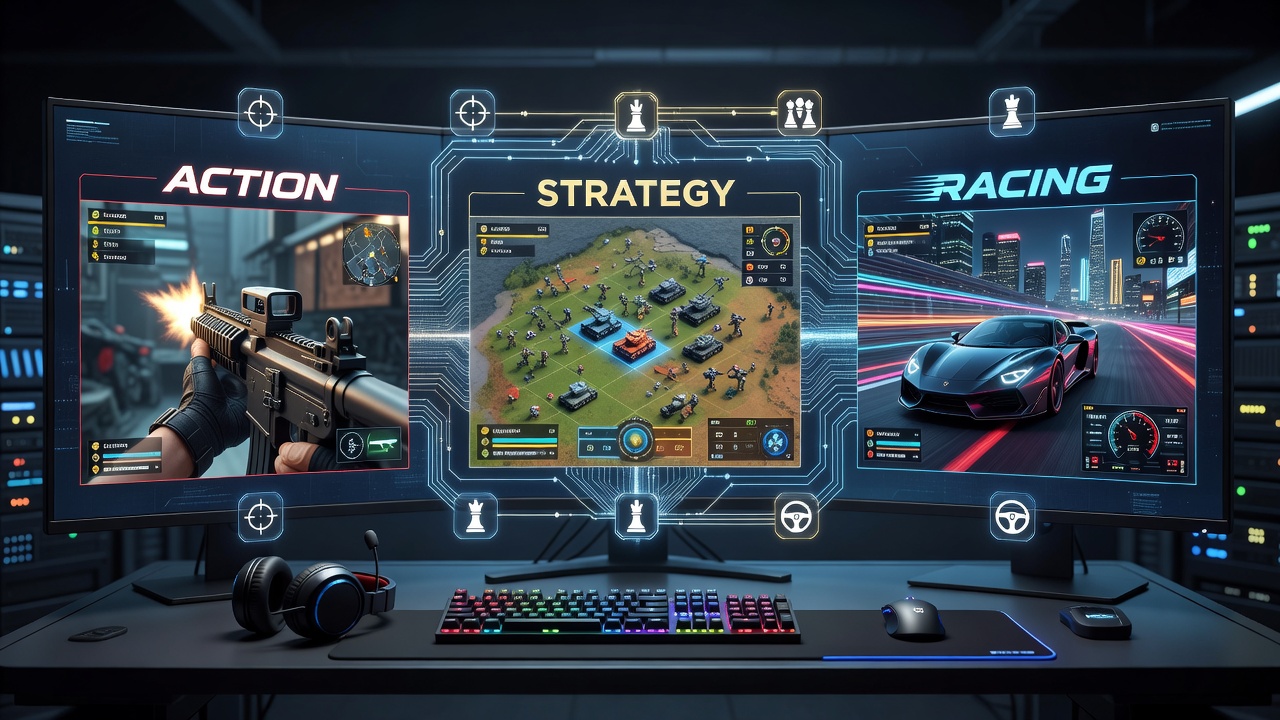
Contemporary online gaming environments feature extensive overlap in player abilities drawn from action, strategy, and racing titles, with data from industry reports indicating measurable skill transfers across these categories. Players develop rapid decision-making through action gameplay, and these abilities frequently apply when executing timed maneuvers in racing formats or allocating resources during strategy sessions. Studies conducted by university researchers in Canada have documented how spatial awareness cultivated in racing titles enhances route planning and positioning in both action and strategy contexts, particularly within multiplayer servers that integrate elements from multiple genres.
Core Abilities Emerging from Action Titles
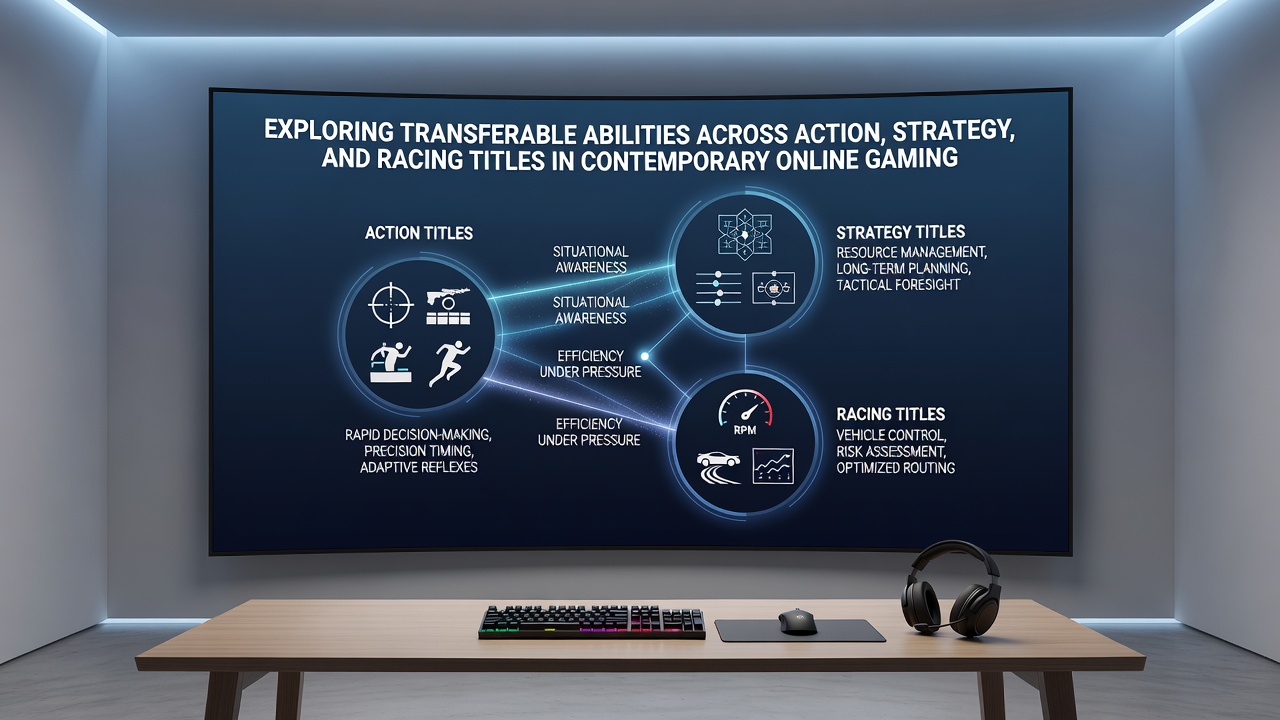
Action games emphasize precision targeting, reflexive responses, and environmental awareness, while participants in online sessions often apply these same capacities when adapting to dynamic obstacles in racing scenarios or coordinating team movements in strategy-based encounters. Research from the Entertainment Software Association shows participation rates in hybrid multiplayer modes increased notably by September 2026, with servers hosting combined action and racing events reporting higher retention among players who previously focused on single-genre experiences. Observers note that quick target acquisition learned in action sequences translates directly to anticipating opponent paths during competitive races, creating measurable performance gains documented in session analytics from European gaming platforms.
Strategic Planning and Resource Management Transfers
Strategy titles foster long-term planning, risk assessment, and resource allocation skills that players carry into racing environments where fuel management or track positioning decisions mirror those required in turn-based campaigns. Data collected across networked platforms reveals participants who engage regularly with strategy layers demonstrate improved lap consistency in racing titles, as they apply similar predictive modeling to cornering choices and overtaking opportunities. In September 2026 updates to several popular online titles, developers incorporated strategy overlays into racing lobbies, resulting in documented shifts in player coordination patterns tracked by Australian research institutions studying digital entertainment behaviors.
Racing Mechanics Influencing Broader Gameplay
Racing games build timing precision, velocity judgment, and trajectory prediction that extend into action sequences requiring accurate movement through complex maps and strategy phases involving unit deployment along calculated paths. Figures from academic studies at institutions in the European Union indicate players with extensive racing backgrounds exhibit faster reaction thresholds when switching to action modes, particularly in team-based online matches where positioning under time pressure determines outcomes. These transfers appear consistently in environments where racing elements combine with shooting or objective-capture mechanics, allowing participants to leverage velocity-based intuition during combat engagements.
Multiplayer Dynamics and Cross-Genre Application
Online multiplayer platforms amplify skill transfer opportunities because shared servers often blend mechanics from action, strategy, and racing titles within single sessions. Participants who rotate between these formats develop adaptive frameworks that support quicker integration into new game types, as evidenced by engagement metrics collected from North American hosting services. Coordination abilities refined through strategy sessions help teams execute synchronized movements in racing events, while action-honed reflexes support split-second adjustments during competitive heats. Reports compiled in September 2026 highlighted increased cross-title participation following the release of unified progression systems that reward abilities demonstrated across genres.
Observed Patterns in Player Progression
Progression data from contemporary web-based portals shows individuals who balance time across action, strategy, and racing titles reach proficiency milestones in new releases at accelerated rates compared to single-genre specialists. Spatial reasoning from racing supports map navigation in action titles, while resource timing from strategy aids in managing cooldowns during races. These patterns hold across diverse server populations, with analytics platforms recording consistent correlations between multi-genre exposure and reduced learning curves in hybrid environments.
Conclusion
Transferable abilities across action, strategy, and racing titles continue to shape player performance in online gaming environments, supported by ongoing data collection from multiple regions. As platforms evolve through 2026 and beyond, the documented intersections between these genres provide structured pathways for skill development that extend beyond individual game boundaries.